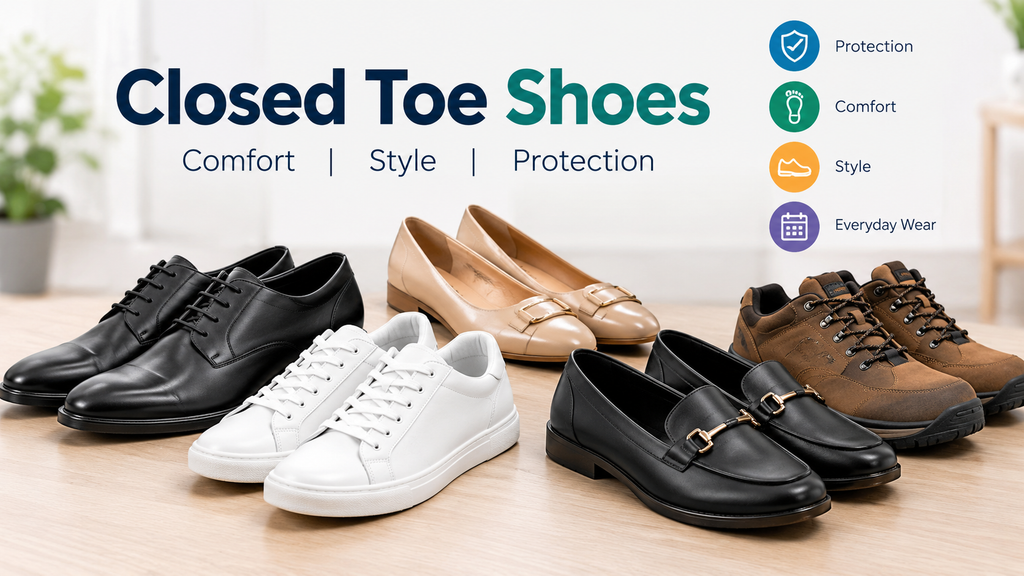
Closed Toe Shoes: A Complete Guide to Comfort, Style, and Protection
Choosing the right pair of shoes can change the way your entire day feels. When your footwear is comfortable, supportive, and appropriate for the situation, walking, working, traveling, and even standing for long periods can become much easier. Closed toe shoes are one of the most practical footwear choices because they cover the front of the foot while offering many different designs for work, casual activities, formal occasions, and everyday use. Unlike sandals and open toe styles, closed toe footwear provides an additional layer between your toes and the outside environment, making it useful in situations where protection, coverage, or a more polished appearance matters.
The phrase “closed toe shoes” covers a surprisingly wide range of footwear. It can include comfortable flats, office shoes, loafers, sneakers, formal leather shoes, walking shoes, work shoes, and safety footwear. The best choice depends on what you plan to do while wearing them. A person looking for office footwear may care most about appearance and all-day comfort, while someone working around tools or heavy objects may need specialized protective footwear. Understanding these differences makes it easier to choose shoes that actually match your lifestyle instead of simply choosing a pair because it looks attractive.
What Are Closed Toe Shoes?
Closed toe shoes are shoes designed with material covering the toes and front portion of the foot. The coverage can be made from leather, synthetic materials, textiles, mesh, canvas, or other footwear materials. The design may extend over the entire foot or may be combined with different heel heights, sole constructions, fastening systems, and levels of cushioning. Because the category is so broad, closed toe shoes can range from simple ballet flats to rugged industrial footwear.
One of the main reasons people choose closed toe footwear is versatility. A simple pair of closed toe flats can work with professional clothing, casual outfits, or travel clothing, while a pair of closed toe sneakers can be used for walking, errands, and everyday activities. Formal closed toe shoes can create a more polished appearance for meetings, weddings, interviews, and special events. At the same time, specialized work shoes can combine closed toe construction with additional protective features when the working environment requires them.
The important point is that “closed toe” describes the basic coverage of the shoe rather than guaranteeing a particular level of protection. A fashionable closed toe flat and an industrial safety shoe may both cover the toes, but they are designed for completely different purposes. Therefore, shoppers should look beyond the name and examine the fit, materials, sole, support, and any safety features that are relevant to their intended use.
How Closed Toe Shoes Differ From Open Toe Shoes
The simplest difference is coverage. Open toe footwear leaves some or all of the toes exposed, while closed toe shoes place a protective layer between the toes and the surrounding environment. This can be useful when walking through busy areas, working in environments with minor physical hazards, or simply when a person prefers more coverage.
Closed toe shoes also tend to create a more structured appearance. This is one reason they are common in offices, schools, formal events, restaurants, and professional environments. However, more coverage does not automatically mean more comfort. A closed shoe can become uncomfortable if its toe box is too narrow, its upper creates excessive pressure, or its materials do not allow enough ventilation.
For that reason, the best closed toe shoe is not necessarily the shoe with the most material. It is the shoe that provides the right combination of coverage, room, support, flexibility, and comfort for the activity.
Why Closed Toe Shoes Matter
Footwear affects much more than appearance. Your feet carry your body throughout the day, so uncomfortable shoes can turn an otherwise normal day into a frustrating experience. A shoe that squeezes the toes, slips at the heel, or provides poor support may create pressure and friction that become increasingly noticeable after hours of walking or standing.
A properly selected pair of closed toe shoes can provide useful coverage while still allowing natural movement. The key is to select a shape that works with the foot rather than forcing the foot into an unsuitable shape. The toe area should provide enough room for the toes to sit naturally, while the heel should remain reasonably secure without creating painful pressure.
Comfort is especially important for people who spend many hours on their feet. Office workers, teachers, retail employees, healthcare workers, travelers, and service professionals may all benefit from footwear that balances protection and comfort. The exact design should depend on the environment, because a comfortable office shoe may not be appropriate for a construction site or industrial workplace.
Protection From Everyday Foot Hazards
Closed toe footwear can provide a basic barrier against everyday contact with objects and surfaces. For example, someone may accidentally bump a toe against furniture, step on a small object, or encounter a rough surface while moving around. A covered toe does not make a shoe a safety shoe, but the additional coverage can still be useful in ordinary situations.
For workplaces with genuine hazards, footwear requirements should be taken much more seriously. Some work environments may involve falling objects, sharp materials, slippery floors, chemicals, or electrical hazards. In those cases, workers may need footwear with specific protective properties rather than simply choosing any closed toe shoe.
This distinction is important because appearance can be misleading. A stylish leather shoe may look strong but may not provide the protection required for industrial work. If your workplace has a formal footwear requirement, check the required specifications before purchasing.
Comfort for Long Hours
Long hours reveal problems that may not be obvious during a five-minute shopping trip. A shoe can feel acceptable at first and become uncomfortable after several hours. This is why fit, cushioning, flexibility, and weight are important considerations when buying closed toe footwear.
Look for enough space around the toes without allowing the foot to slide excessively inside the shoe. The heel should feel secure, and the sole should provide appropriate cushioning for the surface where you will walk. If you regularly stand or walk for long periods, a supportive footbed can make a noticeable difference.
Another useful habit is to try shoes while wearing the type of socks you normally use. A shoe that fits perfectly with thin socks may feel tight with thicker socks. Thinking about the entire wearing situation before buying can prevent many common fitting problems.
Popular Types of Closed Toe Shoes
The variety of closed toe footwear means there is usually an option for almost every wardrobe and activity. The most suitable type depends on the occasion, clothing, environment, walking requirements, and desired level of support.
Some styles prioritize elegance, while others emphasize flexibility and cushioning. Sneakers generally provide a casual appearance and are often designed for movement. Loafers offer a combination of convenience and a more polished look. Flats can be practical for people who prefer little or no heel, while formal leather shoes may be chosen for business or special occasions.
The important thing is to match the shoe with its purpose. Buying one attractive pair and expecting it to perform perfectly in every situation may lead to compromises in comfort or durability.
Closed Toe Flats
Closed toe flats are popular because they combine coverage with a low-profile design. They can be especially useful for office outfits, casual clothing, travel, and occasions where a person wants a feminine or polished appearance without wearing high heels.
A good pair of flats should not simply be judged by how thin or fashionable the sole looks. A little cushioning, a supportive footbed, and a comfortable toe area can make a major difference. The toe box should provide enough room so the toes are not forced together.
Flats also come in many materials and shapes. Leather can provide a classic appearance, while fabric and synthetic materials may offer different levels of flexibility and breathability. Rounded, almond, or wider toe shapes may feel different from narrow pointed designs, so personal fit should remain a priority.
Closed Toe Work Shoes
Closed toe work shoes are designed for people who need practical footwear during working hours. Depending on the job, they may emphasize comfort, slip resistance, durability, water resistance, or specialized protection.
For ordinary office work, a comfortable closed toe loafer or low-profile shoe may be enough. For restaurants, warehouses, workshops, hospitals, laboratories, factories, or construction environments, additional requirements may apply.
Safety footwear is a separate category from ordinary closed toe footwear. Depending on the workplace, protective shoes may include features such as reinforced toe protection, puncture-resistant midsoles, slip-resistant outsoles, or electrical protection. Always follow the safety requirements of the workplace rather than assuming that every closed toe shoe provides the same protection.
How to Choose the Right Closed Toe Shoes
Selecting footwear becomes easier when you evaluate the shoe according to how you will actually use it. Start by identifying the main activity. Will you wear the shoes for walking, office work, travel, formal events, casual outings, or a potentially hazardous workplace?
Once the purpose is clear, consider fit and construction. A shoe that looks excellent but creates pressure after thirty minutes may spend most of its life sitting in your closet. On the other hand, a shoe that fits well and matches your daily routine can become one of the most useful items in your wardrobe.
Think about the surface you normally walk on as well. Smooth indoor floors, pavement, uneven outdoor paths, and wet environments can require different outsole characteristics. The more specific your needs are, the more carefully you should examine the shoe’s construction before buying.
Check the Toe Box and Fit
The toe box is one of the most important areas to examine in a closed toe shoe. Your toes need enough room to rest naturally rather than being squeezed together. A shoe that is too short can place pressure at the front, while a shoe that is too narrow can create uncomfortable side pressure.
Try both shoes because feet are not always exactly the same size. Stand up while checking the fit, since your foot can change shape under body weight. Walk around and pay attention to pressure points, heel movement, and whether your toes can move comfortably.
Do not depend only on the number printed on the shoe. Sizing can vary between brands, models, and countries. The actual fit matters more than the label.
Consider Sole Support and Traction
The sole affects how the shoe interacts with the ground. A sole that is too thin may provide little cushioning on hard surfaces, while a very rigid sole may restrict comfortable movement depending on the shoe design.
Traction is also important. If you work or walk on surfaces that may become wet or slippery, look for an outsole designed for appropriate grip. However, the exact level of slip resistance should match the environment rather than being treated as a universal guarantee.
For everyday shoes, flexibility can also improve comfort. A shoe should provide enough structure to support the foot while still allowing natural movement appropriate for the activity.
Materials Used in Closed Toe Shoes
The material of a shoe affects appearance, durability, flexibility, ventilation, and maintenance. Leather closed toe shoes are popular for formal and professional styles because they can provide a classic appearance and, when properly cared for, can last for a long time.
Synthetic materials are also widely used because they can offer different combinations of affordability, flexibility, water resistance, and easy maintenance. Textile and mesh materials are common in casual and athletic footwear where ventilation and flexibility are important.
There is no single material that is automatically perfect for every person. A person working in a warm environment may prioritize breathability, while someone attending formal meetings may prioritize appearance. The best material depends on where and how often the shoes will be worn.
Leather, Synthetic, and Breathable Materials
Leather is often associated with durability and a traditional appearance. It can work particularly well for formal shoes, loafers, office footwear, and certain work shoes. Regular cleaning and appropriate care can help maintain its appearance.
Synthetic materials can be useful when affordability, easy cleaning, or specific performance characteristics are priorities. Some synthetic shoes are designed to imitate leather, while others are created specifically for flexibility or athletic performance.
Breathable fabrics and mesh are commonly found in casual and walking shoes. They can help create a lighter feel, although the overall comfort of the shoe still depends on its construction, fit, cushioning, and environment.
Closed Toe Shoes for Work
Work footwear should be selected according to the actual demands of the job. Someone working in an office generally has different requirements from someone working in a warehouse, construction site, laboratory, kitchen, or factory.
For office environments, comfort and professional appearance may be the main priorities. A simple closed toe loafer, flat, or formal shoe can provide a polished look while covering the toes. People who walk between meetings or spend significant time standing may want additional cushioning.
For industrial environments, ordinary fashion footwear may not be sufficient. Depending on the hazards, specialized safety shoes can include protective toe caps, puncture-resistant components, slip-resistant soles, and other features. The required protection should always be determined by the workplace hazard assessment and applicable safety rules.
Closed Toe Shoes for Everyday Wear
For everyday life, versatility is often the biggest advantage of closed toe footwear. A comfortable pair can be used for shopping, commuting, traveling, casual meetings, and routine activities. Sneakers, loafers, flats, and casual leather shoes all fit into this category.
When selecting an everyday pair, think about how frequently you will wear it. If the shoes will be used several days a week, comfort and durability become more important than choosing a style that only looks good occasionally.
It is also useful to have more than one pair for regular use. Rotating footwear can allow each pair to air out and reduce constant wear on the same materials. Different shoes can also serve different purposes, such as one pair for walking and another for office clothing.
How to Care for Closed Toe Shoes
Good footwear can last much longer when it is maintained properly. The first step is to keep shoes clean according to their material. Leather, synthetic materials, suede, mesh, and fabric may all require different cleaning methods.
Avoid storing wet shoes in a way that traps moisture. Allow them to dry properly, and follow the manufacturer’s care instructions when available. Using unsuitable cleaning chemicals can damage the upper, finish, adhesive, or color.
Pay attention to the outsole as well. If the tread becomes badly worn, traction may decrease. If the upper becomes damaged or the shoe no longer provides the support you need, replacing it may be safer and more comfortable than continuing to wear it simply because it still looks usable.
Conclusion
Closed toe shoes are one of the most versatile categories of footwear because they combine toe coverage with an enormous range of designs. From comfortable flats and office loafers to everyday sneakers and specialized safety footwear, there is a closed toe option for many different needs. The key is not simply finding a shoe that covers the toes; it is finding one that matches your activity, fits correctly, provides suitable support, and uses materials appropriate for the environment.
Before buying, consider the toe box, overall length, width, heel fit, sole construction, traction, cushioning, material, and intended use. If you need footwear for a hazardous workplace, pay particular attention to the required safety standards rather than relying on appearance alone. For everyday wear, prioritize comfort and fit because a beautiful shoe is of little value if you cannot comfortably wear it for several hours.
A smart footwear choice starts with a simple question: What will I actually do while wearing these shoes? Once you answer that, choosing the right closed toe shoes becomes much easier.
FAQs About Closed Toe Shoes
1. What are closed toe shoes?
Closed toe shoes are footwear styles that cover the toes and front part of the foot. They include many designs such as flats, loafers, sneakers, formal shoes, casual shoes, and work footwear. The level of protection varies by design.
2. Are closed toe shoes good for everyday use?
Yes. Closed toe shoes can be excellent for everyday use when they fit properly and provide appropriate comfort and support. Sneakers, flats, loafers, and casual shoes are common choices for daily activities.
3. Are closed toe shoes the same as safety shoes?
No. A closed toe shoe simply covers the toes, while a safety shoe is designed with specific protective features for particular hazards. Workplace safety requirements should be checked before selecting footwear for hazardous environments.
4. How should closed toe shoes fit?
Your toes should have enough room to move naturally without pressing against the front or sides of the shoe. The heel should feel secure without excessive slipping, and the shoe should feel comfortable when you walk.
5. What should I look for when buying closed toe shoes?
Consider the intended use, toe-box space, width, heel fit, cushioning, sole traction, material, flexibility, durability, and any required safety features. Choose the features that match your actual daily activities rather than selecting footwear based only on appearance.
🔍 Want to find the best keywords and rank this article faster? Try the #1 SEO & AI visibility toolkit free for 14 Days. Track your keyword rankings, audit your site, and monitor your AI search visibility on ChatGPT, Gemini & Google AI Overviews
✨ Get better articles, faster. This prompt is powerful. But Pro Article Writer takes it further — AI humanizer, SEO tools, full editor, one-click options, and more control all in one place. Try it free →
If this prompt helped you, please leave a review — it keeps this prompt ranked #1.
Pingback: Flexible Sole Work Shoes for Comfort
Pingback: Cushioned Office Shoes for All-Day Comfort