Introduction
Choosing the right footwear can make a significant difference in your walking comfort, stability, and overall foot support. Arch support walking shoes are designed to provide cushioning and support, making them a practical option for everyday activities and longer walks. However, selecting the right pair requires attention to fit, arch type, cushioning, and durability. In this article, we will explore the key benefits, selection tips, common mistakes, and care practices to help you make an informed choice.
What Are Arch Support Walking Shoes?
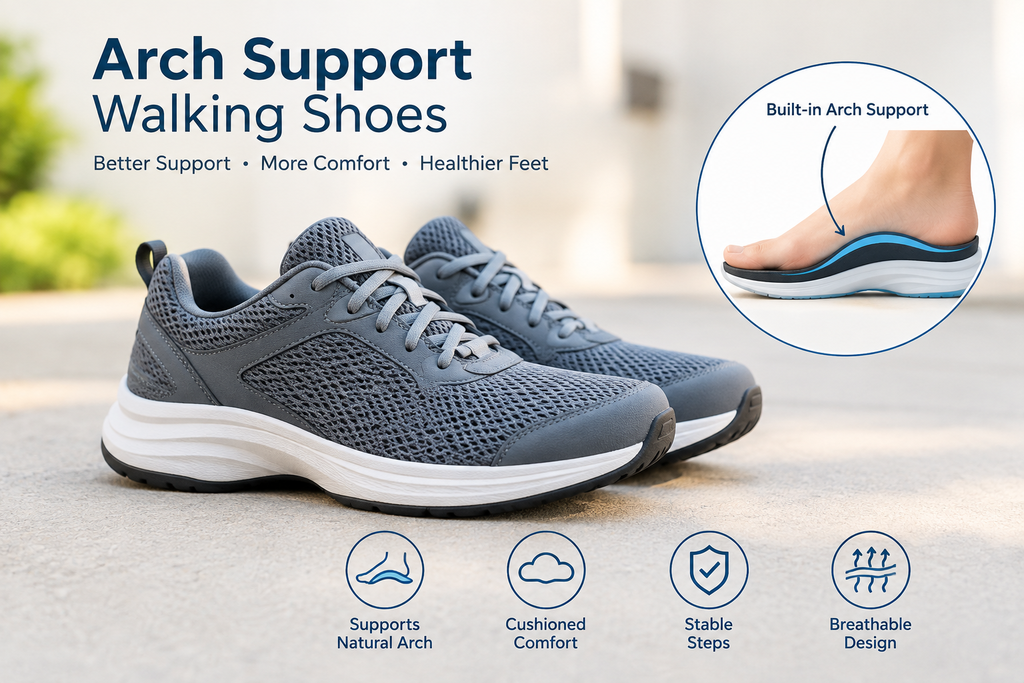
Arch support walking shoes are designed with added structure under the middle part of the foot to provide support while walking. They typically combine a supportive insole, cushioning, and a stable sole to help create a comfortable walking experience. The right design should match your foot shape and provide a secure, comfortable fit.
How Arch Support Works
Arch support helps spread pressure across the foot more evenly and supports the natural shape of the arch. It can also help keep the foot more stable during each step. The amount of support needed varies depending on a person’s foot shape and individual comfort.
Key Features of Supportive Walking Shoes
Supportive walking shoes generally include a stable sole, cushioned insole, secure heel, and enough room for the toes. A flexible forefoot allows natural movement, while breathable materials can improve comfort during longer walks. Good fit is just as important as the shoe’s support features.
Arch Support vs. Regular Walking Shoes
Regular walking shoes may focus mainly on cushioning, flexibility, and general comfort. Arch support walking shoes provide additional structure around the arch area. However, more support is not automatically better; the ideal choice depends on your foot shape, walking needs, and how comfortable the shoes feel.
Why Is Arch Support Important for Walking?
Arch support helps provide a more supported and comfortable base for walking. It can distribute pressure more evenly across the foot, support natural foot movement, and improve stability. The right level of support depends on your individual foot shape and comfort needs.
Helps Improve Walking Comfort
Proper arch support can make walking more comfortable by supporting the middle of the foot and reducing uneven pressure. When the shoe fits well and provides suitable support, the foot can feel more secure during everyday walking.
Supports Proper Foot Alignment
Arch support helps maintain the foot’s natural position inside the shoe. A supportive design can keep the foot more stable as it moves through each step, while a well-fitting shoe helps maintain proper alignment with the ankle and lower leg.
Reduces Pressure on the Feet
Walking places repeated pressure on different areas of the foot. A supportive shoe can help spread this pressure more evenly instead of concentrating it in one area. Cushioning and a properly shaped insole can further improve overall comfort.
Provides Better Stability
A supportive sole and structured arch area can help keep the foot stable while walking. A secure heel and well-fitting upper also help prevent excessive movement inside the shoe, making each step feel more controlled.
Types of Arch Support in Walking Shoes
Walking shoes can provide different levels of arch support to suit different foot shapes and comfort preferences. The main types include low, medium, and high support, along with removable insoles that allow users to adjust the support.
Low Arch Support
Low arch support provides gentle structure under the middle of the foot without creating a strong raised area. It may suit people who prefer light support or whose feet naturally need less structure. Comfort and proper fit should remain the main considerations.
Medium Arch Support
Medium arch support offers a balanced level of structure and cushioning. It provides more support than a low-profile design while remaining comfortable for everyday walking. This option can work well for people who prefer moderate support without a pronounced arch.
High Arch Support
High arch support provides stronger structure beneath the arch area. It is designed for feet with a more pronounced arch that may benefit from additional contact and support. The shape should match the foot closely to avoid uncomfortable pressure.
Removable Arch Support Insoles
Removable insoles can be taken out and replaced with another insole that provides a different level of support. This makes it easier to adjust the shoe according to personal comfort or foot shape. They can also be useful when a different insole is recommended by a qualified professional.
How to Choose the Right Arch Support Walking Shoes
Choosing the right pair depends on your foot shape, walking habits, and comfort needs. Look for suitable arch support, cushioning, stability, and a secure fit rather than focusing on appearance alone.
Consider Your Arch Type
Start by considering whether your feet have low, medium, or high arches. The support should comfortably follow the natural shape of your foot without creating excessive pressure. If you are unsure about your arch type, a qualified foot-care professional can help you identify it.
Check the Shoe Cushioning
Good cushioning helps absorb some of the impact created during walking. Look for cushioning that feels comfortable without making the shoe unstable or overly soft. The right amount depends on your walking style and personal preference.
Look for a Supportive Midsole
The midsole provides much of the shoe’s cushioning and structure. A supportive midsole should offer a stable base while still allowing natural movement. Avoid designs that feel excessively flexible or collapse easily under pressure.
Choose the Right Shoe Width
Your shoes should provide enough width for your feet to sit naturally without being squeezed. There should be adequate space around the toes, while the heel and middle of the foot should remain secure. If your feet are wider, consider shoes available in wide-width options.
Check Heel Stability
A stable heel helps keep the foot securely positioned inside the shoe. Look for a firm heel area that holds the foot without causing discomfort. A secure heel can also help reduce unnecessary movement while walking.
Make Sure the Shoes Fit Properly
Try the shoes with the socks you normally wear and walk around before buying them. Your toes should have enough room to move, and your heel should not slip excessively. Choose the pair that feels comfortable and supportive from the start rather than relying on a long break-in period.
Features to Look for in Arch Support Walking Shoes
When choosing supportive walking shoes, focus on features that improve comfort, stability, and natural foot movement. The right combination of cushioning, flexibility, breathability, and fit can make walking more comfortable.
Cushioned Insoles
Cushioned insoles provide a softer surface under the feet and can improve comfort during walking. They should offer enough padding without making the foot feel unstable. Removable insoles can also allow you to replace them when needed.
Flexible but Supportive Soles
The sole should bend naturally near the front of the foot while maintaining enough structure through the middle. A sole that is too stiff can restrict movement, while one that is excessively flexible may provide less stability.
Breathable Materials
Breathable materials allow air to circulate around the feet and can help reduce heat and moisture buildup. Mesh and other ventilated materials are common choices for walking shoes, especially when they are worn for extended periods.
Wide and Comfortable Toe Box
A spacious toe box gives the toes enough room to spread and move naturally. The front of the shoe should not squeeze the toes or cause pressure along the sides. Choose a width that matches your foot without allowing excessive movement.
Lightweight Construction
Lightweight shoes can make walking feel easier by reducing the amount of weight carried with each step. However, low weight should not come at the expense of essential support, cushioning, or stability.
Who Should Consider Arch Support Walking Shoes?
These shoes may be useful for people who want additional structure and comfort during regular walking or extended periods on their feet. The right choice depends on individual foot shape, activity level, and personal comfort
People Who Walk Frequently
People who walk regularly may prefer shoes that provide consistent cushioning and support. A well-fitting pair can help maintain comfort throughout daily walks and reduce unnecessary movement inside the shoe.
People Who Stand for Long Hours
Those who spend several hours standing may benefit from shoes with supportive insoles, stable soles, and adequate cushioning. A comfortable fit can help reduce pressure caused by prolonged standing.
People Looking for Extra Foot Comfort
People who want more support and cushioning than a basic walking shoe provides may consider this type of footwear. Features such as padded insoles, supportive midsoles, and a comfortable toe box can improve the overall walking experience.
People With Different Arch Shapes
People have different arch shapes, including low, medium, and high arches. Shoes with different support levels can help users choose a design that better matches their individual foot shape and comfort needs.
Arch Support Walking Shoes vs. Other Walking Shoes
Different types of footwear are designed for different activities and support needs. Arch support shoes generally provide more structure around the middle of the foot, while standard, running, and casual shoes may prioritize other features such as flexibility, cushioning, or everyday style.
Arch Support Shoes vs. Standard Walking Shoes
Standard walking shoes are generally designed for comfortable everyday walking with a balance of cushioning and flexibility. Arch support shoes add more structure under the arch area. The better choice depends on your foot shape, walking habits, and the level of support you find comfortable.
Arch Support Shoes vs. Running Shoes
Running shoes are designed for running and often emphasize impact cushioning, lightweight construction, and forward movement. Arch support walking shoes are designed primarily for walking and may provide a more stable structure for a walking gait. Some running shoes also include arch support, so the features can overlap.
Arch Support Shoes vs. Casual Shoes
Casual shoes are mainly designed for everyday use and often focus on appearance and general comfort. Arch support shoes place greater emphasis on foot support, cushioning, and stability. For extended walking, a supportive design may offer features that are not always present in casual footwear.
How Should Arch Support Walking Shoes Fit?
A properly fitted pair should feel secure without squeezing or creating pressure points. The heel and middle of the foot should stay comfortably in place, while the toes should have enough space to move naturally.
Check the Length
There should be enough space between your longest toe and the front of the shoe. Your toes should not touch the front when standing or walking. Try both shoes because foot size can differ slightly between the left and right foot.
Check the Width
The shoe should fit comfortably around the widest part of your foot without squeezing the sides. Your feet should not bulge over the edges of the sole. If the standard width feels tight, consider a wider option.
Leave Enough Toe Room
Your toes need enough space to spread and move naturally. The toe box should not press against the tops or sides of your toes. Avoid shoes that feel tight in the front, even if the rest of the shoe fits well.
Walk Around Before Buying
Walk around in the shoes for several minutes before making a purchase. Check for heel slipping, pressure points, or uncomfortable arch pressure. A well-fitting pair should feel comfortable and stable during normal movement.
How to Break In New Arch Support Walking Shoes
New arch support walking shoes may feel slightly firm at first because the cushioning and support need time to adjust to your feet. Start by wearing them for short periods around the house or during brief walks. Increase the walking time gradually as they become more comfortable. Wear the socks you normally use for walking and make sure the shoes are properly fitted without tight spots or excessive movement. If you notice persistent pain, numbness, or pressure, stop wearing them and check the fit.
Start With Short Walks
Begin by wearing your new shoes for short walks of about 15–20 minutes. This gives your feet time to adjust to the shoe’s arch support and cushioning without causing unnecessary discomfort.
Wear Comfortable Socks
Choose clean, comfortable socks that provide a good fit without creating extra pressure. Avoid socks that are too thin, loose, or tight, as they can cause rubbing and affect overall comfort.
Increase Walking Time Gradually
Once the shoes feel comfortable during short walks, slowly increase your walking time. Add a few minutes every day or two rather than wearing them for long walks immediately. This allows your feet to adapt naturally to the new support.
How to Care for Arch Support Walking Shoes
Proper care helps maintain the comfort, support, and durability of your walking shoes. Follow these simple steps to keep them in good condition and extend their lifespan.
Clean Shoes Regularly
Remove dirt and dust regularly using a soft brush or damp cloth. Use mild soap when needed, and follow the manufacturer’s cleaning instructions. Avoid harsh chemicals that may damage the shoe materials.
Keep Them Dry
Allow your shoes to air-dry naturally after exposure to moisture or sweat. Avoid placing them near direct heat sources, such as heaters or strong sunlight, as excessive heat can damage the materials and affect their shape.
Check the Insoles and Soles
Inspect the insoles and outsoles regularly for signs of wear, flattening, or damage. Replace worn-out insoles when necessary, and check whether the soles still provide adequate grip and stability.
Know When to Replace Them
Replace your walking shoes when the cushioning becomes compressed, the soles show significant wear, or the shoes no longer provide proper support. Continuing to wear worn-out footwear can reduce comfort and affect walking stability.
Common Mistakes When Choosing Arch Support Walking Shoes
Choosing the right walking shoes requires more than focusing on appearance. Avoiding common mistakes can help you find footwear that provides comfort, stability, and suitable support for your feet.
Choosing Shoes Based Only on Appearance
Attractive designs can be appealing, but appearance should not be your main priority. Focus on comfort, proper cushioning, fit, and support to ensure your shoes meet your walking needs.
Buying the Wrong Size
Wearing the wrong shoe size can cause discomfort, blisters, and pressure on your feet. Choose a size that provides enough room for your toes without slipping at the heel. Try shoes on with your usual walking socks to ensure a comfortable fit.
Ignoring Arch Type
Everyone has a different arch shape, so choosing shoes without considering your foot structure can affect comfort. Identify your arch type and look for footwear that provides suitable support without creating pressure or discomfort.
Choosing Too Much or Too Little Support
Too much or too little arch support may cause discomfort and affect your walking experience. Select shoes that offer balanced support based on your foot shape and individual needs. If you experience persistent discomfort, consult a qualified healthcare professional for advice.
Frequently Asked Questions About Arch Support Walking Shoes
What are Arch Support Walking Shoes?
Arch support walking shoes are designed with features that support the natural arch of your foot. They typically include supportive insoles, cushioning, and stable soles to improve comfort and reduce foot fatigue during walking.
Are Arch Support Walking Shoes good for everyday walking?
Yes, arch support walking shoes can be suitable for everyday walking. They provide cushioning, stability, and support for activities such as walking, shopping, and standing. Choose a pair that fits comfortably and suits your foot shape.
How do I know if I need arch support?
You may benefit from arch support if you experience foot fatigue, discomfort, or a lack of stability while walking. However, these symptoms can have different causes. If you experience persistent foot pain, consult a healthcare professional for personalized advice.
How should Arch Support Walking Shoes fit?
Arch support walking shoes should fit snugly without causing pressure or discomfort. Your toes should have enough room to move, while the heel should remain secure. Try both shoes on and walk around to check the fit before purchasing.
Can I use Arch Support Walking Shoes for long walks?
Yes, you can use arch support walking shoes for long walks if they provide comfortable cushioning, proper support, and a secure fit. Choose shoes that suit the walking surface and gradually increase walking distance when trying a new pair.
How often should walking shoes be replaced?
Walking shoes commonly need replacement after approximately 300–500 miles, depending on usage, shoe quality, and walking conditions. Replace them sooner if the cushioning wears down, the soles lose grip, or the shoes no longer provide adequate support.
Final Thoughts on Arch Support Walking Shoes
Choosing the right arch support walking shoes can improve walking comfort and provide suitable support for your daily activities. Focus on proper fit, cushioning, arch compatibility, and durability when selecting a pair. Avoid common mistakes, maintain your shoes regularly, and replace them when they show significant wear. By considering your individual foot needs and walking habits, you can find footwear that supports a more comfortable walking experience.
Pingback: Minimalist Casual Shoes: Simple, Stylish & Comfy