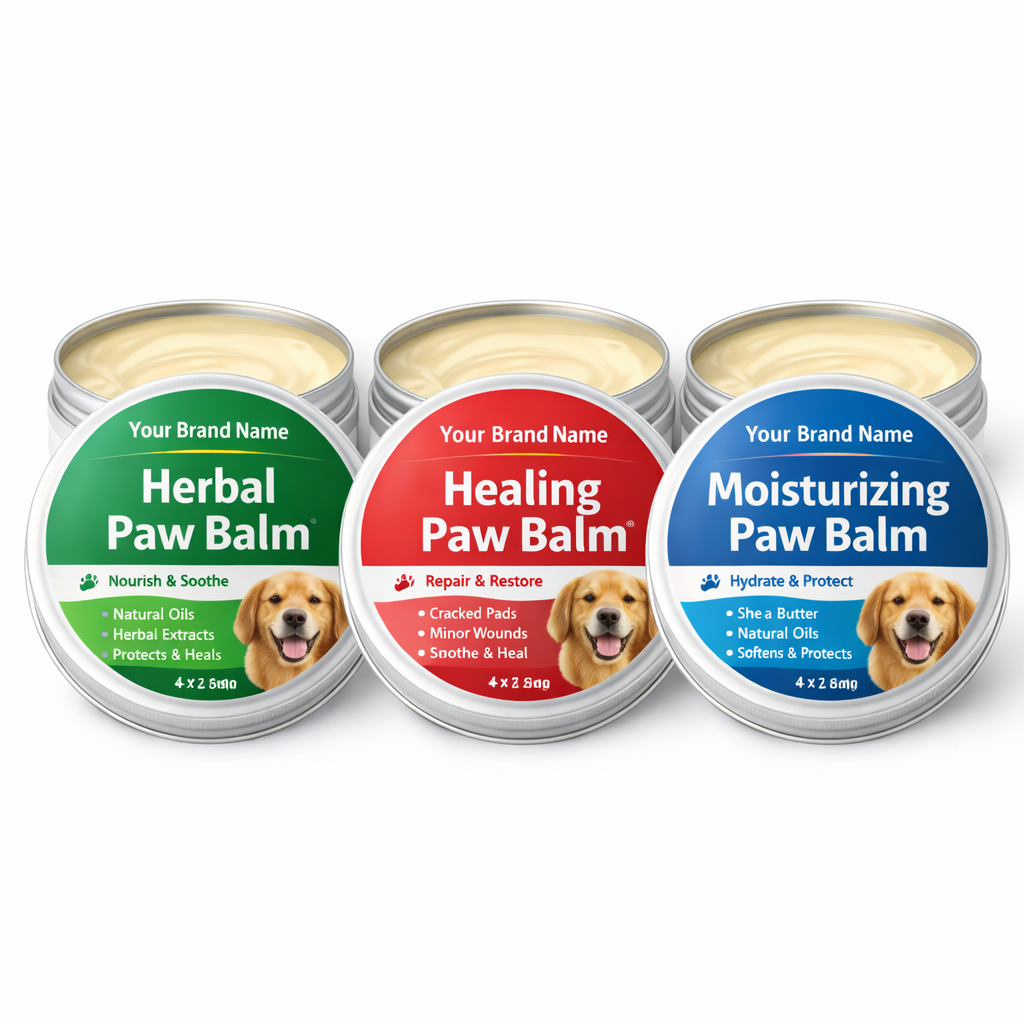
Your dog’s paws probably work harder than you realize. Every walk, run, jump, hike, and trip across the yard puts pressure on those small paw pads. Although dog paws are naturally designed to handle rough ground, they can still become dry, cracked, irritated, burned, or uncomfortable when exposed to extreme temperatures, rough surfaces, snow, ice, salt, or chemicals. That is where balm for dog paws can become a useful part of a regular paw-care routine. Veterinary and pet-care sources describe paw balms as topical products that can moisturize dry pads while some formulas also create a protective barrier against environmental exposure.
The important point is that paw balm is not a magic treatment for every paw problem. Think of it more like a protective layer of clothing for your dog’s feet. A suitable balm may help maintain healthy skin and reduce dryness, but it cannot replace veterinary treatment when there is a deep wound, infection, serious burn, bleeding, or another underlying condition. Hot pavement can also become dramatically hotter than the surrounding air, creating a real burn risk even when the weather does not feel extreme.
What Is Balm for Dog Paws?
Dog paw balm is a topical wax, ointment, or skin-conditioning product designed specifically for a dog’s paw pads. Depending on its formulation, it may moisturize rough skin, reduce dryness, and create a physical barrier between the paw and environmental irritants. Some products are designed primarily for moisturizing, while others focus more heavily on outdoor protection from snow, ice, salt, rough terrain, or dry conditions. Because dogs naturally lick their feet, products made specifically for dogs are generally preferable to randomly choosing a human skin-care product.
A dog’s paw pads are specialized structures that provide cushioning, grip, and protection while walking. They are tougher than ordinary skin, but toughness does not make them invulnerable. Veterinary sources explain that paw pads can suffer from cracking, burns, blisters, cuts, irritation, and other forms of damage. A good balm can therefore be useful as part of prevention and routine maintenance, particularly for dogs that spend a lot of time outdoors or frequently encounter harsh surfaces. However, owners should always read the product label and use a formulation appropriate for dogs rather than assuming that anything marketed as “natural” is automatically safe.
How Paw Balm Works
Paw balm generally works in one or both of two ways: conditioning the skin and creating a protective barrier. Moisturizing ingredients can help reduce excessive dryness, while waxes and oils may leave a thin layer over the surface of the pad. That barrier can reduce direct contact with some environmental irritants and may help prevent snow or ice from sticking between the toes. Veterinary guidance from VCA describes paw balm or wax as an option for dogs that are hesitant to wear protective booties, particularly in cold-weather conditions.
Still, the barrier is not the same thing as an invisible suit of armor. If your dog walks repeatedly over extremely hot pavement, sharp objects, broken glass, or heavily salted surfaces, balm alone may not provide enough protection. In winter, for example, balm can help reduce contact with salt and prevent ice buildup, but cleaning the paws after the walk remains important. For serious exposure or particularly sensitive paws, boots and route selection may offer additional protection.
Why Dogs May Need Paw Balm
Not every dog needs paw balm every day. A healthy dog that walks mostly on comfortable surfaces may have perfectly healthy paw pads without any topical product. The need becomes more obvious when a dog regularly encounters conditions that dry, irritate, or mechanically stress the paws. Active dogs, hiking dogs, dogs walking on rough terrain, and dogs exposed to winter salt or hot pavement may benefit from having a paw-care routine.
The signs are usually easy to notice if you know what to look for. Your dog might lick its paws more than usual, hesitate before walking, lift one foot, develop visibly rough pads, or show discomfort after outdoor activity. These signs do not automatically mean the solution is balm, because similar symptoms can have many causes. A small amount of dryness may respond well to routine moisturizing, whereas persistent licking, swelling, bleeding, discharge, or significant pain should prompt veterinary attention. Paw care works best when you treat it as prevention and maintenance rather than waiting until a serious problem develops.
Dry and Cracked Paw Pads
Dryness is one of the most common reasons dog owners look for a balm for cracked dog paws. Paw pads can become rough when repeatedly exposed to dry environments, abrasive surfaces, cold weather, or other irritants. A suitable balm can help condition the surface and reduce moisture loss, making the pads feel more supple. Some veterinary-oriented sources describe emollients and skin-conditioning ingredients as useful for dry skin, although the appropriate product depends on the individual dog and the underlying reason for the dryness.
The key is to avoid treating every crack as a simple cosmetic problem. A shallow, dry surface may be appropriate for routine paw care, but deep cracks can become painful and provide an opportunity for infection. If the paw is bleeding, swollen, producing discharge, or causing persistent licking or limping, a balm should not be your only response. Veterinary evaluation may be necessary to identify infection, allergy, trauma, or another underlying condition.
Dog Paw Balm for Hot Pavement
Summer pavement is one of the situations where dog owners should think beyond air temperature. Asphalt, concrete, sand, and metal surfaces can become much hotter than the surrounding air, and the American Animal Hospital Association explains that surface temperatures can be dramatically higher than air temperatures. That means a pleasant-looking summer day can still expose your dog’s paws to dangerously hot ground. The safest strategy is to reduce exposure rather than relying on balm as a complete solution.
A paw balm may provide conditioning and a limited protective layer, but it cannot make scorching pavement safe. Consider walking during cooler parts of the day, choosing grassy routes where appropriate, and checking the walking surface before a long walk. If your dog begins lifting a paw, refusing to walk, or showing obvious discomfort, stop and inspect the feet. Paw burns can require veterinary care, so prevention should come before cosmetic paw conditioning.
Dog Paw Balm for Winter and Snow
Winter creates a different collection of problems. Cold temperatures, snow, ice, wet ground, and de-icing products can all affect paw comfort. Snow may accumulate between the toes, while ice can form small hard clumps that make walking uncomfortable. Road salt and chemical de-icers can irritate paw pads, and dogs may ingest residue when they lick their feet after a walk.
A suitable winter paw balm can act as a moisture-conditioning product and may create a barrier between the pads and some environmental contaminants. VCA specifically describes balm or wax as an option for helping prevent snow and ice balls from forming and for creating a barrier against salt and de-icing agents. Even so, winter paw care should include checking and cleaning the feet after outdoor activity. A balm works best as one part of a broader routine rather than as the only line of defense.
Protection From Road Salt
Road salt deserves special attention because it can irritate paw pads and may also become a problem if your dog licks contaminated feet. Veterinary sources recommend avoiding salt-treated areas when possible and cleaning the paws after exposure. A simple rinse or wipe can remove residue that a balm cannot physically remove.
If your dog frequently walks on treated sidewalks, consider combining several strategies: use a dog-safe paw balm before the walk, choose less-treated routes when possible, inspect the paws afterward, and gently rinse or wipe away residue. Boots can provide a stronger physical barrier for dogs that tolerate them. The goal is not to find one product that solves everything; it is to reduce exposure from several directions.
Best Ingredients in Dog Paw Balm
When shopping for dog paw balm, reading the ingredient list is more useful than judging the product solely by its packaging. Common conditioning ingredients include plant oils, waxes, shea butter, and other skin-softening substances. Waxes can help create a barrier, while oils and butters can contribute to the moisturizing effect. Some commercial formulations also include vitamin E or aloe.
There is no single ingredient combination that is automatically the best choice for every dog. A sensitive dog may react differently from another dog, and a product designed for winter protection may have a different texture from one designed mainly for moisturizing. Look for a product specifically formulated for dogs, with clear ingredient information and straightforward directions. If your dog has known allergies or a history of skin sensitivity, discuss the ingredient list with your veterinarian before introducing a new topical product.
Ingredients to Avoid
The phrase “natural” does not automatically mean “safe for dogs.“ Dogs have different metabolisms and behaviors from humans, and topical products can be licked from their feet. That makes ingredient selection especially important. Human lotions, fragranced cosmetics, and products containing potentially harmful essential oils or other unsuitable ingredients should not be casually transferred to your dog’s paws.
A simple formula can be attractive because fewer ingredients may make it easier to understand exactly what you are applying. Avoid products that provide unclear ingredient information or make broad safety claims without explaining their formulation. If your dog immediately develops redness, swelling, increased licking, or obvious discomfort after using a product, discontinue it and contact your veterinarian for advice.
Why Lick-Safe Formulas Matter
Dogs are naturally curious about anything placed on their feet. Even if you apply a very small amount, your dog may attempt to lick it away. That is why a product specifically formulated for dogs is generally a better choice than a human skin product. Vetstreet also notes that dogs tend to lick paw balm, making dog-safe and non-toxic formulations particularly important.
“Lick-safe” should not be interpreted as permission for unlimited ingestion. The goal is to choose a product designed with normal incidental licking in mind, then apply only the amount recommended by the manufacturer. If your dog repeatedly consumes the product or develops unusual symptoms, stop using it and contact a veterinary professional.
How to Apply Balm to Dog Paws
Applying paw balm is simple, but technique matters. Start with clean, dry paws whenever possible. Inspect the pads and the spaces between the toes first, looking for cuts, foreign objects, redness, swelling, or anything unusual. If the paws are dirty, gently clean them and dry them before applying the product.
Take a small amount of balm and massage a thin layer into the paw pads. Depending on the product directions, you may also apply it between the toes or around the sides of the paw. Do not use excessive amounts simply because the pads look dry; a thick greasy layer can make floors and walking surfaces slippery. Some veterinary guidance also recommends distracting your dog with a treat after application so the product has time to remain on the paws rather than being immediately licked away.
How Often Should You Use Paw Balm?
There is no universal schedule that applies to every dog. Application frequency depends on the product, the condition of the paw pads, the dog’s activity level, and environmental exposure. Some products are designed for regular maintenance, while others are intended for use before outdoor activities or during periods of dryness. The safest starting point is always the manufacturer’s directions.
For example, a dog that spends several hours hiking on rough terrain may have different needs from a dog that takes two short walks on soft grass. Likewise, winter salt exposure may require a different routine from ordinary dry skin. Rather than applying more balm simply because you think more must work better, monitor your dog’s paws and adjust according to the product directions and veterinary advice when needed.
Paw Balm vs Dog Boots
Paw balm and dog boots serve different purposes. Balm is a topical product that conditions the paw and can create a protective barrier. Boots provide a physical covering that separates the paw from the walking surface much more directly. For heavily salted sidewalks, extremely cold conditions, sharp terrain, or situations where maximum physical protection is needed, boots may provide protection that balm cannot.
The challenge is that not every dog likes wearing boots. Some dogs need gradual training before they are comfortable walking in them, while others may simply refuse. Paw balm can be easier to introduce because it does not change the way the dog walks. In some situations, owners may use both approaches: balm for conditioning and boots for stronger environmental protection. Veterinary sources describe both options as useful tools depending on the circumstances.
Can You Use Human Lotion on Dog Paws?
It is better not to assume that a human moisturizer is suitable for a dog. Human products may contain fragrances, preservatives, active ingredients, or other substances that are not intended for dogs and may become problematic when licked. Even when an ingredient is considered acceptable for human skin, that does not automatically establish that the finished product is appropriate for canine use.
A purpose-made dog paw balm is generally easier to evaluate because it is formulated specifically for canine paw care. If your dog has a persistent paw problem, however, simply switching between moisturizers is not the answer. Repeated dryness, cracking, licking, redness, or inflammation can sometimes indicate an underlying condition that requires professional evaluation.
Balm for Cracked and Rough Dog Paws
A balm can be useful when paw pads are mildly dry and rough, especially when the dryness is associated with environmental exposure. Moisturizing and barrier ingredients can help support the surface of the pad and make it more comfortable. Regular paw inspection is just as important because it allows you to notice changes before they become severe.
Imagine the paw pad as a hardworking piece of leather. If you repeatedly expose leather to harsh conditions without maintenance, it can become dry and eventually crack. Paw balm is similar to conditioning that material: it can support flexibility and surface comfort, but it cannot repair a deep structural injury. When cracks become deep, painful, bloody, swollen, or infected-looking, veterinary care becomes more important than continuing to apply cosmetic products.
Paw Balm for Active and Hiking Dogs
Hiking dogs put unusual demands on their paws. Rocks, gravel, rough trails, hot ground, cold surfaces, and long periods of walking can create substantially more mechanical stress than a short neighborhood walk. For these dogs, paw conditioning may be helpful, but gradual conditioning of the pads and careful route selection are equally important.
Before a long hike, inspect the paws rather than waiting until the dog shows discomfort. After the hike, check each paw carefully for cuts, lodged debris, redness, cracks, or foreign objects. A dog that suddenly starts limping should not simply be encouraged to continue because “the balm will protect it.” Paw balm is a support tool, not permission to ignore signs of injury.
Choosing the Right Paw Balm
Choosing the right balm for dog paws begins with identifying the problem you are trying to solve. If the main issue is dryness, look for a dog-specific conditioning formula. If winter exposure is the concern, a waxier barrier formula may be more suitable. If your dog spends a lot of time hiking, you may want to prioritize a product intended for outdoor protection while still maintaining a sensible paw inspection routine.
Here is a simple comparison:
| Paw-care need | What to look for | Additional protection |
| Dry pads | Moisturizing dog-safe ingredients | Regular inspections |
| Winter salt | Protective barrier | Rinse paws after walks |
| Snow and ice | Wax/balm that helps reduce buildup | Remove ice gently |
| Hot pavement | Conditioning and barrier support | Avoid hot surfaces |
| Hiking | Durable protective formula | Inspect paws after activity |
| Sensitive paws | Simple, dog-specific formula | Veterinary guidance if persistent |
The “best” balm therefore depends on the dog’s circumstances rather than a universal ranking. A product that works well for a winter dog may not be the ideal choice for another dog living in a hot climate.
Common Mistakes Dog Owners Make
One common mistake is applying balm without checking the paws first. If there is a thorn, cut, burn, infection, or foreign object, covering the paw with balm may delay recognition of the actual problem. Another mistake is applying too much product, which can make the paws greasy and potentially slippery. Vetstreet specifically warns that oily balms can reduce traction on slick surfaces, which may be particularly concerning for older dogs that already have difficulty maintaining their footing.
Another mistake is assuming balm makes extreme conditions safe. A protective product cannot turn extremely hot pavement into a safe walking surface, nor can it completely eliminate contact with chemicals on a heavily treated sidewalk. Good paw care is a combination of prevention, inspection, cleaning, conditioning, and sensible decisions about where and when your dog walks.
When Paw Balm Is Not Enough
Paw balm is appropriate for routine care, but some paw problems need professional attention. If your dog has a deep crack, active bleeding, significant swelling, discharge, severe pain, persistent limping, or a wound that does not improve, contact a veterinarian. Constant licking can also signal discomfort, allergy, irritation, infection, or another condition that needs investigation.
This distinction is important because topical products can sometimes make owners feel as though they are treating the problem when they are actually only covering the symptoms. A veterinary professional can determine whether the issue is simple dryness or something more complicated. Current veterinary-oriented guidance emphasizes that bleeding, swelling, discharge, persistent discomfort, and serious wounds should not be managed solely with home paw balm.
Signs Your Dog Needs a Veterinarian
Watch for changes that go beyond ordinary dryness. A dog that repeatedly refuses to walk, continuously licks one paw, has a visibly open wound, or develops swelling deserves closer attention. Deep cracks and bleeding should not be treated as ordinary cosmetic dryness.
If you are uncertain, it is safer to ask a veterinary professional rather than experimenting with multiple products. Paw problems can have different causes, and the correct treatment depends on the cause. The earlier a significant problem is recognized, the easier it may be to manage.
Simple Daily Paw-Care Routine
A practical paw-care routine does not have to take more than a few minutes. Check the paws after walks, especially when your dog has been outdoors in extreme weather or on unfamiliar terrain. Look between the toes, examine the pads, and remove visible dirt or debris. If your dog has been exposed to salt or de-icing chemicals, gently clean the feet afterward.
For dogs prone to dryness, apply an appropriate dog paw balm according to the product instructions. Give the balm time to absorb and prevent your dog from immediately licking it all away when possible. Regular nail trimming and keeping excessive hair around the feet under control can also contribute to comfortable movement. Veterinary guidance recommends regular paw checks and appropriate protective measures as part of year-round paw care.
Frequently Asked Questions About Dog Paw Balm
1. Is balm good for dog paws?
A suitable dog-specific balm can help moisturize dry paw pads and, depending on its formulation, create a protective barrier against environmental exposure. It is most useful as part of routine paw care rather than as a universal treatment for injuries.
2. Can I put paw balm on cracked dog paws?
For mild dryness and surface cracking, a dog-safe moisturizing balm may be useful. However, deep cracks, bleeding, swelling, discharge, or significant pain require veterinary attention rather than relying solely on balm.
3. How often should I apply dog paw balm?
Follow the specific product instructions. Frequency can vary depending on the formulation, weather, activity level, and condition of the paws. Applying more product than recommended does not necessarily provide better protection.
4. Is dog paw balm useful in winter?
Yes, some paw balms are designed to help protect and moisturize paws during winter. They may help reduce snow and ice buildup and create a barrier against salt or de-icing substances, but paws should still be checked and cleaned after walks.
5. Can paw balm replace dog boots?
Not completely. Balm can condition the paw and provide a barrier, while boots provide a physical covering. The better option depends on the environment, the dog’s tolerance, and the level of protection required.
Conclusion
Balm for dog paws can be a simple and useful addition to your dog’s grooming and outdoor-care routine. It may help maintain moisture, soothe mild dryness, and provide a protective layer when paws face challenging conditions such as rough terrain, winter salt, snow, or dry weather. But the product itself is only one piece of the puzzle. Regular inspections, sensible walking choices, cleaning after exposure to irritating substances, and appropriate veterinary care are equally important. When choosing a paw balm, focus on a product specifically formulated for dogs, check the ingredient list, follow the application directions, and consider your dog’s actual lifestyle. A hiking dog, a city dog exposed to salted sidewalks, and a dog living in a hot climate may all have different paw-care needs. Most importantly, do not use balm as a substitute for professional care when your dog has significant pain, bleeding, swelling, infection, or a serious paw injury. Healthy paws come from consistent care—not from one miracle product